


The hidden cost of clinical notes is stealing hours from your day. Here's how to get them back.
If you're a physician, you already know the drill: for every patient you see, you spend nearly as much time documenting as you do actually providing care. Studies show the average physician spends 4.5 hours per day on EHR tasks — that's more than half the workday buried in screens instead of with patients.1
The Hidden Cost of Clinical Notes
Here's what the research tells us:
- 16+ minutes per patient visit spent on EHR documentation2
- 35% of total work time goes to documenting patient data3
- 1-2 hours of "pajama time" — charting done at home, after hours1
- Primary care physicians log 36 minutes of EHR time for every 30-minute visit1
This isn't just an inconvenience. It's the leading driver of physician burnout.
What If Documentation Took Minutes, Not Hours?
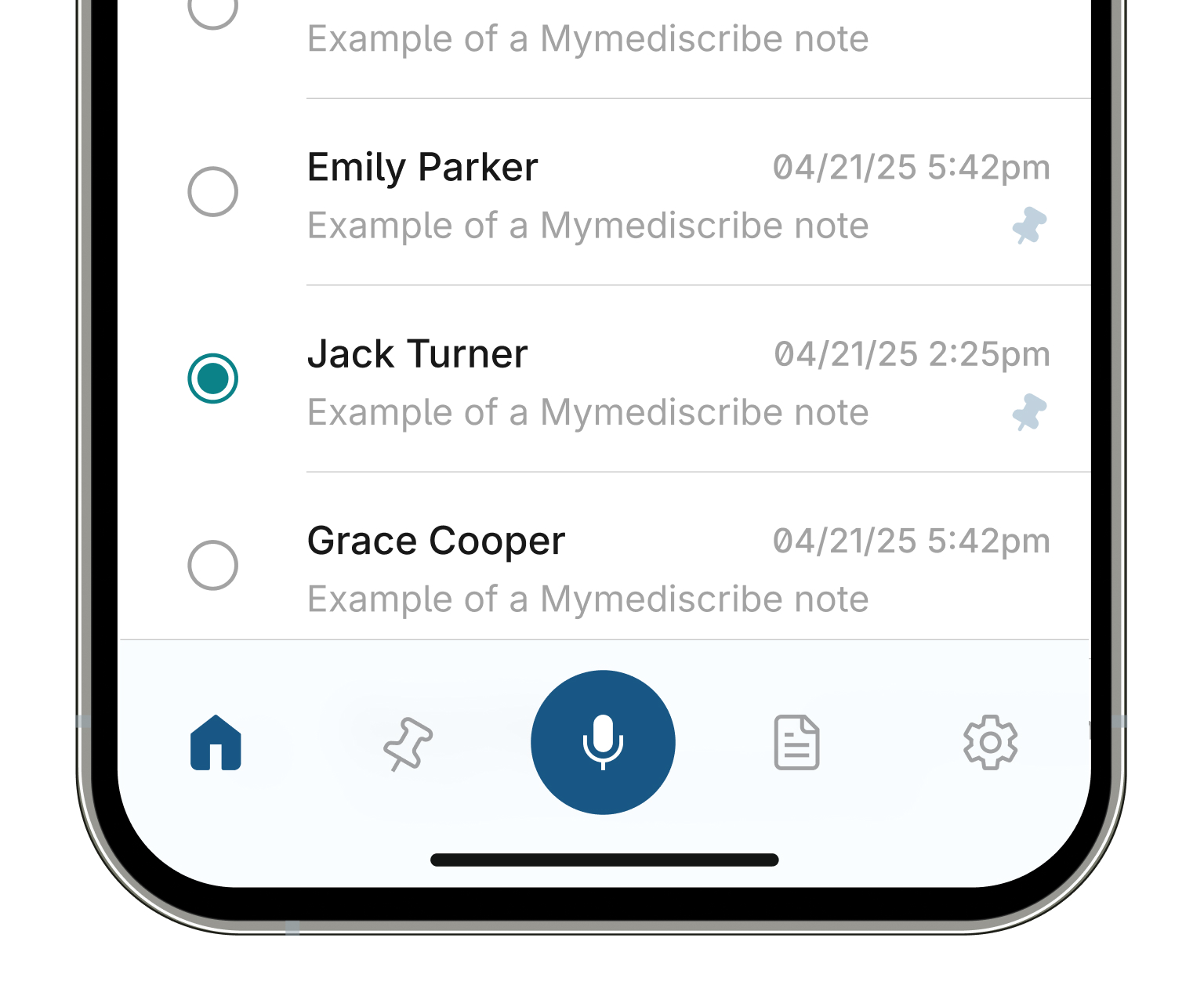
MyMediScribe changes the equation. Instead of typing notes during or after each visit, you simply have a conversation with your patient. Our AI listens, transcribes, and generates a complete SOAP note — ready for your review in seconds.
📊 The Math
Traditional Documentation:
16 min/visit × 20 patients = 5+ hours/day
With MyMediScribe:
2 min review × 20 patients = 40 min/day
Traditional "Pajama Time": 10+ hours/week
With MyMediScribe: Zero after-hours charting
That's 4+ hours back every single day — time you can spend with patients, with family, or simply not working at 10 PM.
Better Notes, Better Care
When you're not racing to document, you're present. You make eye contact. You listen. Patients notice.
And because MyMediScribe captures the full conversation with word-for-word transcripts, nothing gets missed. No more "what did they say about that medication?" moments.
Ready to Stop Drowning in Documentation?
Join the physicians who've already reclaimed their time.
Start Your Free Trial →References
- Arndt BG, et al. "Tethered to the EHR: Primary Care Physician Workload Assessment Using EHR Event Log Data and Time-Motion Observations." Annals of Family Medicine. 2017;15(5):419-426. PubMed
- Sinsky C, et al. "Allocation of Physician Time in Ambulatory Practice: A Time and Motion Study in 4 Specialties." Annals of Internal Medicine. 2016;165(11):753-760. PubMed
- Tai-Seale M, et al. "Electronic Health Record Logs Indicate That Physicians Split Time Evenly Between Seeing Patients And Desktop Medicine." Health Affairs. 2017;36(4):655-662. PubMed